
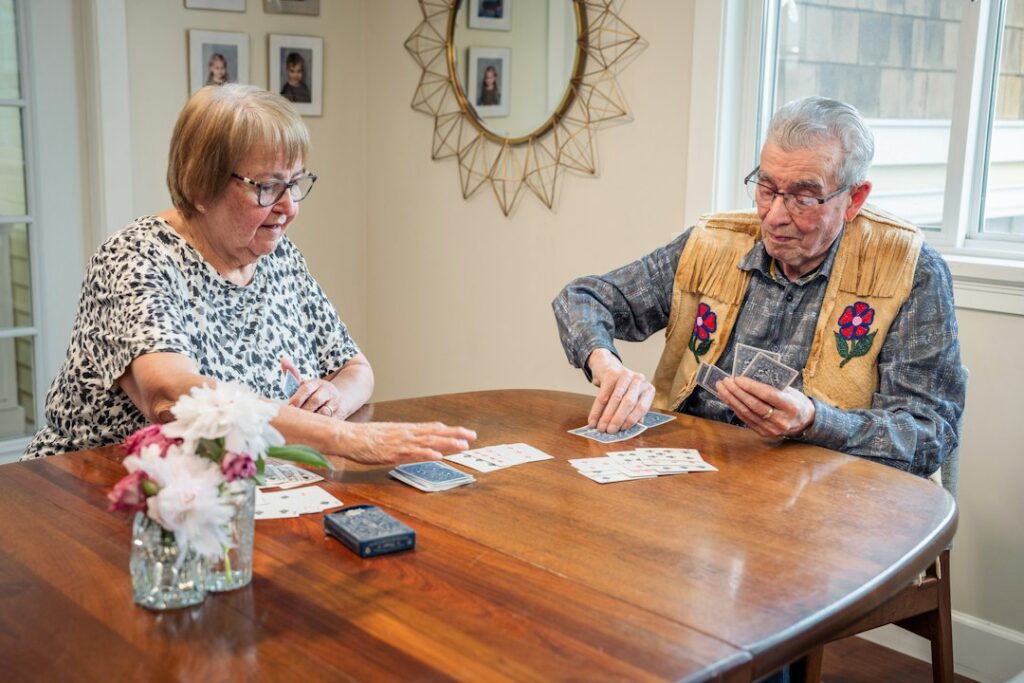
Creative hobbies can give assisted living residents a meaningful way to spend time, express themselves, maintain familiar routines, and connect with others. Activities do not need to be complicated, expensive, or physically demanding to be enjoyable. The most successful hobbies are usually flexible enough to match a person’s interests, energy level, vision, hearing, mobility, and comfort with social interaction.
Why are creative hobbies helpful for older adults?
Creative hobbies provide more than entertainment. They can support emotional well-being, encourage gentle mental engagement, and create opportunities for conversation and friendship.
Making something by hand may also help a resident feel capable and independent. Completing a greeting card, arranging flowers, painting a small picture, or finishing a puzzle gives the activity a visible result. That sense of progress can be especially valuable during a transition to assisted living.
Creative activities may support:
- Self-expression and personal identity
- Hand coordination and controlled movement
- Attention, memory, and decision-making
- Social connection and conversation
- Relaxation during stressful or restless periods
- A sense of purpose and daily structure
A hobby should never feel like a test or obligation. Enjoyment matters more than producing something perfect.
Which hobbies work well in assisted living?
The best choices are adaptable, safe, and easy to pause. Residents may enjoy several different activities rather than committing to one long-term project.
Drawing, coloring, and painting
Drawing and painting can be adjusted for many skill levels. Some residents may prefer watercolor, while others may enjoy colored pencils, washable markers, or large-format coloring pages.
Large-handled brushes and easy-grip pencils can help residents with arthritis or reduced hand strength. An angled writing surface may make it easier to see and reach the page. Simple subjects, such as flowers, landscapes, pets, or familiar household objects, can provide inspiration without making the activity feel demanding.
Painting can also become a social activity. Residents may compare colors, talk about places they have visited, or create seasonal decorations for their rooms.
Crafting with fabric, yarn, or paper
Craft projects can include knitting, crocheting, weaving, quilting, collage, paper folding, and simple sewing. Residents who have crafted for many years may appreciate familiar patterns, while beginners may prefer short projects with clear steps.
For people with limited finger movement, larger yarn, blunt needles, pre-cut paper, or adhesive materials can make the activity more manageable. Projects should avoid loose pieces that could create a slipping or choking hazard, particularly in shared activity areas.
Useful small projects include:
- Fabric bookmarks
- Decorated greeting cards
- Paper flowers
- Simple wreaths
- No-sew fleece pieces
- Collage pages for a memory book
The goal is participation, not speed or technical accuracy.
Music and singing
Music is a creative hobby that does not always require strong vision or hand coordination. Residents may enjoy singing familiar songs, playing a small instrument, listening to meaningful recordings, or creating personal playlists with assistance.
Music can prompt memories and conversation. A song from a person’s younger years may lead to stories about family celebrations, work, dancing, or holidays. Group singing can also provide social contact for residents who find open-ended conversation difficult.
Volume and stimulation should be considered. Some residents may prefer quiet instrumental music, while others enjoy lively group participation.
Journaling and storytelling
Writing can take many forms. A resident might keep a daily journal, write short poems, record family memories, or dictate stories to another person. Prompts can make it easier to begin:
- What was a favorite childhood meal?
- Which household chore was most satisfying?
- What holiday tradition mattered most?
- What advice would be helpful to younger family members?
- Which places, pets, or friends are remembered most fondly?

Residents who have difficulty writing may use large-print notebooks, voice recording, picture prompts, or conversation-based storytelling. Spelling and grammar do not need to be corrected unless the resident requests help. The personal meaning of the story is more important than its form.
How can hobbies be adapted for changing abilities?
A creative activity can often be modified rather than discontinued. Vision changes may call for brighter lighting, larger patterns, high-contrast materials, or verbal instructions. Hearing changes may make written directions and face-to-face demonstrations more useful.
Residents with memory loss may benefit from familiar, repetitive projects with a visible beginning and end. A tray with only the needed materials can reduce confusion. Short sessions may be more successful than expecting someone to remain engaged for an hour.
For limited mobility, activities can be completed at a table, in a comfortable chair, or from bed when appropriate. Materials should be placed within easy reach, and heavy containers should be avoided.
A hobby may need to change from month to month. Fatigue, pain, medication effects, mood, and sleep can all influence participation. Flexibility prevents a formerly enjoyable activity from becoming frustrating.
Are creative hobbies safe for seniors?
Most creative activities can be made safe with basic planning. Good lighting, stable seating, clear walkways, and organized materials reduce preventable problems. Scissors, hot glue, sharp tools, small objects, and strong adhesives may require supervision or substitution.
Residents should also consider skin sensitivity, allergies, respiratory concerns, and the need for clean-up. Paints, glues, and scented materials should be used in well-ventilated areas and according to their labels.
For people with tremors, weakness, or coordination difficulties, adaptive tools may help. Examples include non-slip mats, lightweight containers, built-up handles, spring-assisted scissors, and clips that hold paper in place. Any activity involving heat, cutting, chemicals, or electrical equipment should be reviewed for individual safety needs.
How can residents enjoy hobbies during seasonal changes?
Seasonal conditions in Irwin can affect transportation, daylight, and energy levels. During colder or wetter periods, indoor hobbies offer a practical way to maintain routine without depending on outdoor activities. Winter-themed crafts, family history projects, indoor gardening, and music sessions can provide variety during shorter days.
In warmer seasons, residents may enjoy nature sketching from a window, arranging safe cut flowers, decorating outdoor gathering areas, or creating artwork based on local scenery. Outdoor projects should include shade, comfortable seating, hydration, and attention to heat or sudden weather changes.
Seasonal hobbies can also help mark time. Decorating for holidays, making cards, or assembling a memory display may give residents something familiar to anticipate.
What if a resident says they are “not creative”?
Creativity is not limited to drawing or making decorative objects. Choosing colors, arranging photographs, telling a story, singing, decorating a personal space, and deciding how materials should be used are all creative acts.
Some residents may resist activities labeled as crafts because they associate them with school projects or tasks they never enjoyed. Offering choices without pressure can help. A person who declines painting may still enjoy sorting photographs, listening to music, repairing a simple item, arranging a collection, or sharing family recipes.
The activity should fit the resident, not the other way around. A quiet individual may prefer solitary work, while another person may gain energy from a group. Both preferences are valid.
How can family members support a creative hobby?
Family members can provide materials connected to a resident’s history, such as photographs, fabric samples, recipe cards, postcards, or familiar music. Short visits centered on an activity may feel more comfortable than conversations that require constant questions.
It can help to ask open but specific questions: “Would you like to choose the colors?” or “Which photograph should go first?” This supports decision-making without taking over.
Finished projects do not need to be displayed publicly. Some residents enjoy sharing their work, while others prefer to keep it private or give it to someone they love. Respecting that choice is part of making creative hobbies personally meaningful.
