
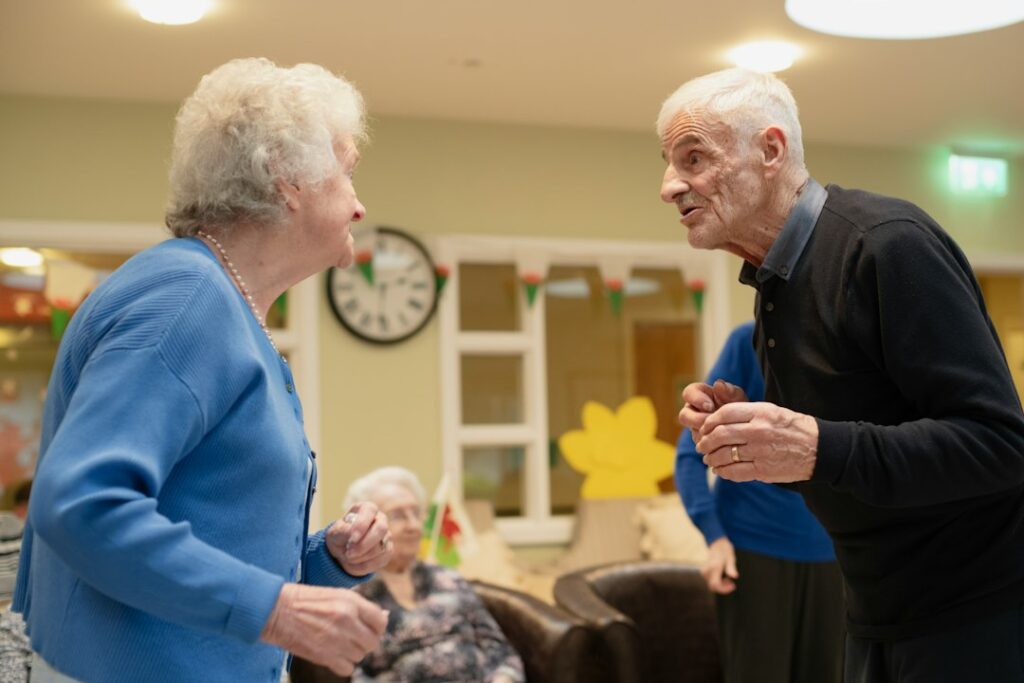
Assisted living communities bring together residents with different routines, health needs, personalities, and communication styles. Disagreements can develop over noise, shared spaces, personal belongings, visitors, meals, care routines, or misunderstandings with staff.
Conflict does not always mean that someone has acted intentionally or that a relationship cannot be repaired. In many cases, the situation improves when concerns are reported clearly, discussed at the right time, and addressed with a focus on safety and dignity.
What kinds of conflict are common in assisted living?
Most conflicts fall into a few broad categories: resident-to-resident disagreements, concerns involving staff, family disagreements, and disputes about daily routines or care decisions.
Examples include:
- A resident feels another person is taking over a shared table, lounge area, or activity space.
- One resident is bothered by repeated noise, television volume, hallway conversations, or nighttime disruptions.
- Personal items are misplaced, borrowed without permission, or mistaken for someone else’s property.
- A resident feels rushed, ignored, or spoken to disrespectfully during a care interaction.
- Family members disagree about transportation, visitors, finances, medical decisions, or how much support a relative needs.
- A resident refuses a routine, meal, activity, or care task because the reason has not been explained clearly.
A conflict may also be connected to memory loss, hearing difficulty, pain, medication effects, anxiety, depression, or changes in judgment. That does not make harmful behavior acceptable, but it can affect how the situation should be approached.
What should a resident do first?
The first step is to identify whether the situation is uncomfortable, unsafe, or urgent. Immediate danger, threats, physical aggression, suspected abuse, or serious neglect should be reported to staff without delay and may require emergency assistance.
For a lower-level disagreement, pause before responding. Anger, embarrassment, fatigue, or confusion can make a small dispute escalate quickly. If possible, move to a quieter area and give everyone time to settle.
A useful first statement is specific and calm:
> “I felt uncomfortable when my belongings were moved. Please ask me before touching them.”
This approach describes the behavior and its effect without assigning motives. Saying “You are always trying to upset me” is more likely to create defensiveness and less likely to solve the problem.
How can residents resolve disagreements with one another?
Direct conversation may help when both residents feel safe and are able to communicate. The discussion should focus on one issue at a time.
Helpful practices include:
- Choose a calm time rather than raising the issue during an argument.
- Use short, concrete statements.
- Avoid bringing up every past disagreement.
- Ask questions before assuming intent.
- Agree on a practical next step, such as lowering the television volume or keeping personal items in a marked area.
- End the conversation if either person becomes threatening, overwhelmed, or unable to participate safely.
Residents do not have to confront someone directly if they are frightened, confused, or concerned about retaliation. A staff member can help mediate the conversation and clarify expectations for shared spaces.
A common misconception is that ignoring conflict will always make it disappear. Sometimes distance helps, but repeated problems involving noise, intimidation, unwanted touching, or property should be documented and reported.
How should a concern about staff be reported?
A concern involving staff should be reported through the community’s established chain of communication. Start by describing what happened, when it occurred, who was present, and what outcome is being requested.
For example, “The evening medication explanation was too rushed, and the resident did not understand what was being offered” is more useful than “The staff is careless.”
A resident or family member may ask to speak with a supervisor or the person responsible for resident services. Written communication can help preserve details, especially if the concern involves repeated incidents.
Keep a simple record containing:
- Date and approximate time
- Location
- People involved
- Exact words or actions remembered
- Any injury, missed care, damaged property, or emotional distress
- Names of witnesses
- Steps already taken
Documentation should be factual rather than speculative. Avoid exaggeration, insults, or conclusions about a person’s character.
If the concern involves possible abuse, neglect, exploitation, retaliation, or immediate danger, it should be escalated promptly through appropriate protective, regulatory, or emergency channels. A resident’s fear of punishment should also be reported.
What role should family members play?
Family members can help by listening carefully, separating facts from assumptions, and avoiding public confrontations. A relative who is upset may need validation before discussing solutions.
Useful questions include:
- “What happened first?”
- “Who was present?”
- “Has this happened before?”
- “What would help you feel safer or more respected?”
- “Did anyone explain the reason for the decision?”

Family members should avoid promising a specific result before the situation is reviewed. They should also be cautious about speaking for a resident who can express personal preferences. Support does not mean taking away the resident’s voice.
For residents with memory or communication changes, family observations can be valuable. Staff may notice patterns that are not visible during a short visit, while family members may recognize changes in behavior, comfort, or routine.
How can communication barriers be reduced?
Conflict is more likely when people cannot hear, understand, remember, or process information easily. Practical adjustments can prevent many disagreements.
These may include:
- Moving to a well-lit, quiet area.
- Speaking slowly and using plain language.
- Asking the person to explain the plan in their own words.
- Using written reminders, calendars, labels, or visual schedules.
- Allowing extra time for responses.
- Checking whether hearing aids, glasses, or communication devices are available and working.
- Avoiding arguments about details that cannot be confirmed immediately.
For a resident living with dementia, correcting every inaccurate statement may increase distress without solving the underlying issue. A calmer approach may be to acknowledge the emotion, offer reassurance, and redirect attention while still reporting safety concerns.
What should happen after a conflict?
A disagreement is not fully resolved simply because the conversation ends. The people involved should know what will happen next, who will follow up, and how future problems should be reported.
A reasonable follow-up plan may identify:
- A change in seating, activity participation, or room access
- A reminder about privacy or personal property
- A care approach that better matches the resident’s preferences
- A meeting with the resident, family, and appropriate staff
- A date to review whether the problem has improved
Residents should not be pressured to reconcile personally with someone who threatened, harmed, or repeatedly intimidated them. Respectful distance and safety planning may be more appropriate than restoring the relationship.
Seasonal conditions can also affect tension in assisted living settings. During cold, icy, or stormy periods in Irwin, residents may spend more time indoors, activities may be adjusted, and shared spaces may feel more crowded. Clear schedules, quiet areas, and patient communication can help reduce friction during these changes.
When is conflict a safety issue?
Conflict becomes a safety issue when it includes physical contact, threats, stalking, coercion, sexual misconduct, theft, financial pressure, deliberate isolation, or interference with medication, meals, mobility, or personal care.
A resident who feels unsafe should tell staff directly and use emergency assistance when there is an immediate threat. Family members should take reports seriously, even if the details are incomplete or the resident has difficulty explaining what occurred.
The goal is not to assign blame as quickly as possible. It is to protect the resident, preserve accurate information, reduce further harm, and create a fair plan for addressing the concern.
