
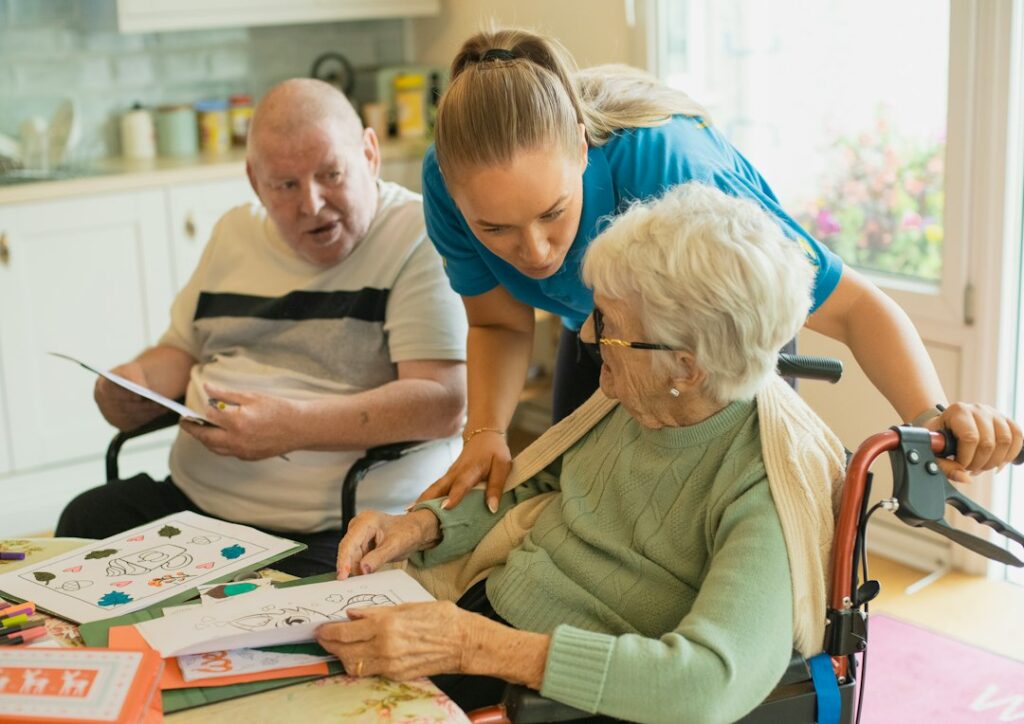
Dementia can affect memory, communication, judgment, mood, sleep, and the ability to complete everyday tasks. In assisted living, the most effective support combines safety with dignity: routines should be predictable, communication should be respectful, and care should reflect the individual’s history, abilities, and preferences.
For families in Irwin, PA, assisted living may provide help with meals, personal care, medication routines, supervision, and activities while allowing a senior to remain part of a residential community. The right approach changes as dementia progresses, so regular communication between the resident, family, care team, and medical providers is essential.
What does dementia-friendly care look like?
Dementia-friendly care treats the person as an individual rather than focusing only on symptoms. Staff and family members should learn what helps the senior feel calm, capable, and familiar with the surroundings.
Useful information to share includes:
- Preferred name and communication style
- Previous occupation, hobbies, faith practices, and family roles
- Typical sleep and meal patterns
- Foods the person enjoys or avoids
- Past experiences that may cause fear or distress
- Signs of pain, anxiety, illness, or overstimulation
- Helpful calming activities, such as folding laundry, listening to music, looking through photographs, or taking a supervised walk
A person with dementia may no longer remember a family member’s name but still respond warmly to a familiar voice or gentle touch. Preserving emotional connection is often more meaningful than testing memory.
How should family members communicate with a senior who has dementia?
Use short, calm statements and allow extra time for a response. Approach from the front, make eye contact, say the person’s name, and explain one step at a time.
For example, instead of saying, “Are you ready to get dressed and come down for breakfast?” try, “Good morning, Margaret. Let’s put on your sweater.” After that step is complete, provide the next direction.
Helpful communication habits include:
- Ask simple yes-or-no or either-or questions.
- Offer two choices instead of an open-ended question.
- Reduce background noise during conversations.
- Check whether hearing aids and glasses are being used.
- Repeat or rephrase information without sounding frustrated.
- Speak to the resident directly, even when family or staff are present.
- Avoid quizzing the person about dates, names, or forgotten events.
Arguing rarely restores memory. If a senior insists that a deceased relative is coming to visit, correcting the statement may increase distress. A better response may be, “You miss her. Tell me about her,” followed by a comforting activity or change of setting.
How can routines reduce confusion?
A consistent routine can make daily life easier because fewer decisions are required. Similar times for waking, bathing, meals, activities, and bedtime may reduce anxiety and resistance.
Transitions should be explained before they happen. A move to a new room, a change in dining arrangements, or a new caregiver can be unsettling even when the change seems minor to others. Familiar objects such as a favorite blanket, framed photographs, a well-marked dresser, or a simple calendar can help the resident recognize personal space.
Seasonal conditions also deserve attention. Cold weather, shorter winter daylight, rain, and icy walkways can limit outdoor activity and contribute to restlessness. During darker months, well-lit common areas and safe indoor activities can help maintain movement and social connection. In warmer weather, hydration, shade, appropriate clothing, and supervision outdoors become more important.
What should assisted living staff and families watch for?
A sudden change in behavior is not always “just dementia.” New confusion, sleepiness, agitation, withdrawal, refusal to eat, falls, or unusual aggression can be signs of pain, infection, constipation, dehydration, medication effects, or another medical problem.
Families should ask how changes are documented and communicated. Useful questions include:
- When did the change begin?
- What was happening immediately beforehand?
- Does it occur at a particular time of day?
- Has eating, drinking, sleep, or toileting changed?
- Were there recent medication changes?
- What approaches have helped?
- When should a medical provider be notified?

Patterns often reveal practical solutions. A resident who becomes upset during bathing may be cold, rushed, embarrassed, or uncomfortable with the bathroom setup. Adjusting the water temperature, timing, privacy, or explanation may help more than insisting on the original routine.
How can wandering and falls be addressed?
Wandering is common in dementia and may occur because a person is searching for someone, trying to complete a former responsibility, responding to an unmet need, or becoming disoriented. The behavior should be assessed rather than treated as deliberate misbehavior.
Families can ask an assisted living residence about:
- Door and exit monitoring
- Supervised walking areas
- Procedures for a resident who leaves a designated area
- Identification methods and emergency contact information
- Fall-prevention practices
- Lighting, handrails, flooring, and bathroom safety
- How staff respond when a resident repeatedly tries to leave
Shoes should fit securely, mobility aids should be used correctly, and pathways should remain clear. Medication review, vision checks, hydration, and attention to blood pressure can also affect fall risk.
Pennsylvania distinguishes between personal care homes and assisted living residences, and both are licensed settings with requirements related to resident safety, staff training, health care, and personal care. Families should understand what level of supervision a particular residence is licensed and equipped to provide, especially if wandering, falls, or behavioral symptoms are increasing.
How can families stay involved without creating confusion?
Regular visits are helpful, but the quality and timing of a visit matter more than its length. A quiet morning visit may be easier for one resident, while another may be more alert after lunch. Familiar activities—looking through photographs, sorting cards, listening to music, taking a supervised walk, or sharing a snack—often work better than asking repeated questions.
If a visit becomes upsetting, changing the activity or taking a short break may help. A family member does not have to prove that the resident remembers the visit. Calm presence still provides reassurance.
Keep communication organized by identifying the appropriate contact person and asking how updates are shared. Families should report changes noticed during visits, while staff can explain patterns observed between visits. A written summary of preferences, medications, allergies, mobility needs, and calming strategies can be useful when care staff change.
When should the care plan be reconsidered?
A care plan should be reviewed whenever there is a meaningful change in memory, mobility, eating, sleep, mood, continence, behavior, or medical needs. It may also need revision after a fall, hospital stay, new diagnosis, or repeated attempts to leave the building.
Assisted living may remain appropriate for some people with dementia, while others eventually need a more specialized secured dementia setting or nursing-level care. The decision should be based on safety, health needs, staffing capabilities, supervision requirements, and the resident’s preferences and rights—not on a diagnosis alone.
Good dementia support is built through steady observation, respectful communication, familiar routines, and timely responses to changing needs. Those practices help seniors remain involved in daily life while giving families clearer ways to participate in care.
