
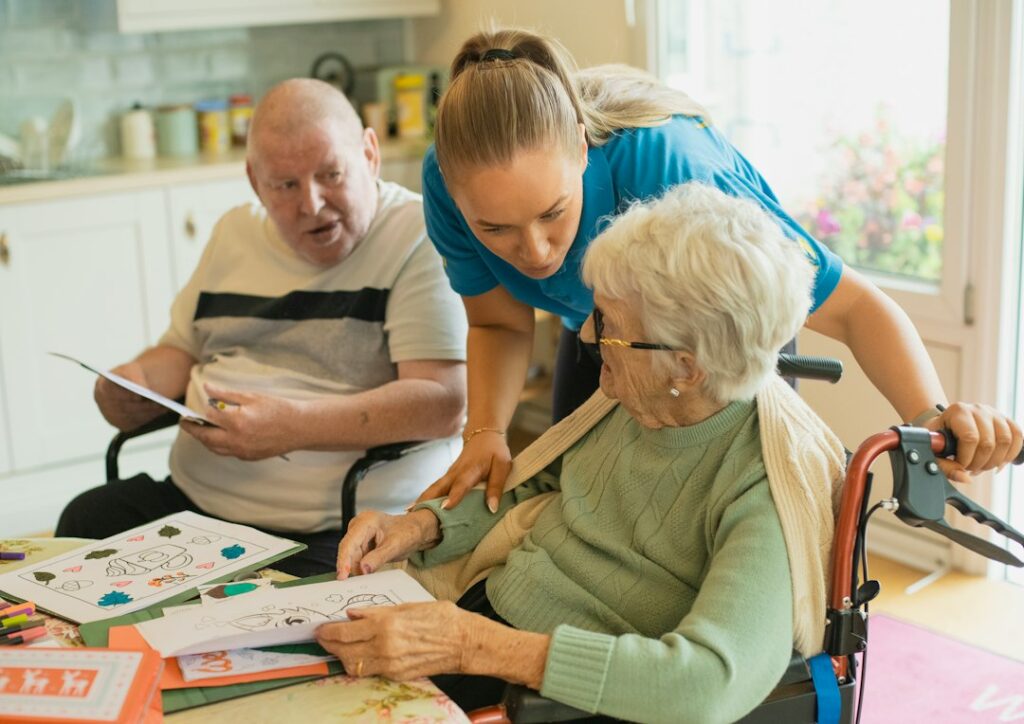
What are intergenerational activities in assisted living?
Intergenerational activities bring older adults and younger people together for shared conversation, learning, creativity, or recreation. In an assisted living setting, these activities may involve grandchildren, school-age children, teenagers, college students, families, or organized youth groups.
The purpose is not simply to provide entertainment. Well-planned activities can support social connection, mental stimulation, emotional well-being, and a stronger sense of belonging. They can also help younger participants understand aging in a more personal and respectful way.
For residents and families in Irwin, PA, intergenerational programs can be especially meaningful because they create opportunities for connection within the broader community without requiring older adults to travel far or manage complicated transportation arrangements.
How do these activities benefit older adults?
Intergenerational activities may improve daily life by giving residents more chances to talk, share memories, use familiar skills, and participate in something meaningful. The benefits vary by individual, but several common areas stand out.
Reduced loneliness and social isolation
Regular interaction with younger people can add variety to a resident’s routine. A visit from a child, a conversation with a teenager, or a shared craft project may provide companionship that feels different from conversations with peers or caregivers.
This does not mean intergenerational programs replace friendships with other older adults. Instead, they add another type of social contact. For residents who have lost friends, live far from family, or have limited mobility, these interactions may be a valuable part of maintaining social engagement.
Opportunities to share knowledge
Older adults often have practical knowledge, stories, traditions, and skills that younger people have not encountered. Residents may teach simple recipes, discuss local history, explain how household tasks were once completed, or demonstrate sewing, gardening, music, woodworking, or another hobby.
Sharing knowledge gives residents an active role rather than positioning them only as recipients of care. That sense of contribution can support confidence and personal identity.
Mental stimulation
Conversation with younger people can encourage residents to recall experiences, explain ideas, answer questions, and adapt to different communication styles. Activities such as reading together, playing games, discussing photographs, or completing a small project may exercise attention, memory, language, and problem-solving.
Mental stimulation should be enjoyable rather than stressful. The goal is participation and connection, not testing a resident’s memory or expecting a particular performance.
Improved mood and sense of purpose
A planned visit or shared activity gives residents something to anticipate. Positive interaction may ease boredom and create moments of laughter, curiosity, or pride.
Residents who have limited independence may particularly value activities where they can make choices, help another person, or contribute to a group. Even a short conversation can feel purposeful when it is respectful and reciprocal.
What activities work well for different ages and abilities?
The most successful activities are flexible, simple to understand, and designed around shared participation. They do not need to be elaborate or expensive.
Examples include:
- Reading picture books, poetry, or short stories together
- Making seasonal decorations or greeting cards
- Singing familiar songs or playing simple instruments
- Looking through family photographs and recording memories
- Planting seeds in indoor containers or tending a raised garden bed
- Playing card games, puzzles, bingo, or board games with adapted rules
- Sharing a cooking demonstration using safe, prepared ingredients
- Creating a community scrapbook or oral-history project
- Working on art projects that allow different levels of ability
- Holding a show-and-tell session about hobbies, school subjects, or family traditions
- Watching a short educational program and discussing it afterward
For residents with dementia or other cognitive changes, activities should focus on sensory experiences, familiar routines, music, pictures, and short conversations. A person may participate by choosing colors, listening to a song, holding a tool, or watching others work. Participation does not have to involve speaking or completing the entire project.
Can children and older adults learn from each other?
Yes. Intergenerational programs are most valuable when learning moves in both directions.
Older adults may share life experience, cultural traditions, practical skills, and historical perspective. Younger participants may introduce new music, technology, games, school experiences, or creative ideas. This exchange can challenge stereotypes on both sides.
Children may learn that older adults have varied interests, personalities, and abilities. They may also become more comfortable communicating with people who move, speak, hear, or remember differently.
Residents can gain a clearer understanding of current childhood experiences, education, family life, and technology. A teenager showing how a digital device works, for example, may create a useful conversation even if the resident does not want to use the device independently.
What should families consider before a visit?
Families should match the activity to the resident’s comfort, health, communication style, and energy level. A resident who enjoys children may still become tired after a long visit or feel overwhelmed in a noisy room.

Helpful planning questions include:
- Is the activity short enough for the resident’s attention span and stamina?
- Will the setting be calm, accessible, and easy to navigate?
- Can the resident participate without needing fine motor skills, hearing, or memory?
- Are there quiet options if the group becomes tiring?
- Does the resident want to participate, or is attendance being assumed?
- Are younger visitors prepared to listen and allow extra time for responses?
Visits should be respectful and voluntary. Children should not be pressured to hug, perform, or interact in a particular way. Older adults should not be expected to entertain visitors or disclose personal information.
How can activities work during southwestern Pennsylvania seasons?
Seasonal planning can help programs remain consistent when weather affects travel and outdoor activities. During colder months, indoor gardening, music, baking demonstrations, storytelling, and craft projects can provide meaningful alternatives.
In spring and summer, residents and younger visitors may enjoy container gardening, patio activities, nature observation, or art inspired by plants and seasonal changes. Outdoor plans should account for heat, humidity, rain, uneven surfaces, shade, hydration, and access to seating.
Winter weather may also affect family schedules and transportation. A shorter visit, a small indoor gathering, or a shared activity completed through a supervised video call may be more practical than canceling all contact.
Are there challenges with intergenerational activities?
There can be challenges, including differences in energy, communication, attention span, sensory needs, and expectations. A large group of excited children may be enjoyable for some residents but uncomfortable for others. Younger visitors may also need guidance about speaking clearly, waiting patiently, and respecting personal space.
Programs should include appropriate supervision, infection-control practices, accessible seating, and a plan for residents who need assistance. Activities should be adjusted during periods of illness or when a resident’s health needs change.
Another common misconception is that every resident will enjoy intergenerational contact. Some people prefer quiet activities or conversations with familiar peers. Choice matters. A successful program offers opportunities without treating participation as an obligation.
How can families make a visit more meaningful?
A meaningful visit usually includes a shared focus rather than unstructured conversation alone. Bringing a photograph, song, simple game, craft, or question about the resident’s past can make interaction easier.
Good conversation prompts include:
- What was a favorite game during childhood?
- What music brings back good memories?
- What household skill did you learn from a parent or grandparent?
- What advice would you give someone learning a new skill?
- What changes in the community have you noticed over the years?
The most valuable part of a visit may be listening. Residents do not need to provide a perfect story, remember every detail, or keep a conversation moving continuously. A calm exchange, shared smile, or familiar song can be a complete and worthwhile experience.
